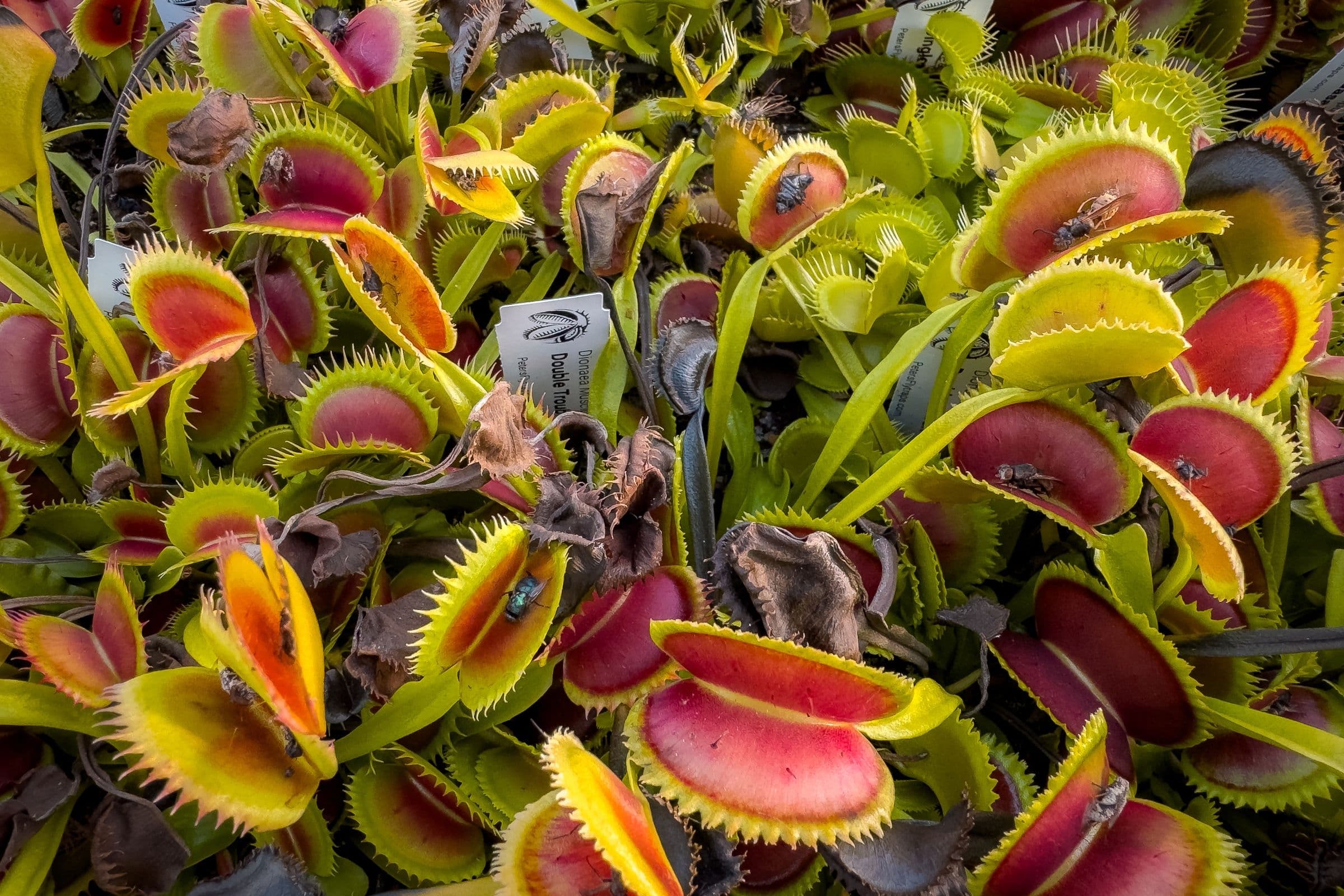
The end of summer and start of autumn is the time I get the most worried messages and comments: "My flytrap's traps are turning black, is it dying?" In most cases, the answer is simple: no, it's not. Let's go through what's actually happening to Venus flytraps this time of year and what you should check before winter arrives.
Why old traps turn black, and why that's fine
Every trap on a Venus flytrap (Dionaea muscipula) has a limited lifespan. After a few closures and digesting prey, a trap naturally wears out, turns black, and dies off. It's the same process as other plants' leaves turning yellow and falling in autumn. It just looks more dramatic on a flytrap because the traps are so vividly colored and shaped.
How to tell everything's fine: Look at the center of the rosette. If the plant keeps putting out new, light green growth despite the old traps blackening, there's no reason to worry. It's a completely natural cycle, and the plant is just shedding the old to make room for the new.
When should you be concerned instead? If young, freshly opened traps are also turning black, or if the plant has stopped producing new growth altogether, it's worth looking for another cause, typically overwatering, rot in the substrate, or pests.
Sun-scorched traps after summer are normal too
The second common "problem" at the end of summer: traps or leaf edges have browned or blackened as if burned. Flytraps need a lot of direct sun, but intense summer sun in a greenhouse can genuinely scorch them, much like it would our own skin.
If you grow your flytraps in a greenhouse in full summer sun, it's worth using around 30% shade cloth during the most intense months. It protects the plants from burning without depriving them of the light they need. Now that the sun isn't as intense anymore, it's time to take the shade cloth down so the plants get maximum light to build up strength before winter dormancy.
Autumn check-up: what to do with your flytraps after summer
The end of summer is a good time for a small "autumn clean-up" of your whole collection:
- Check your plants for pests. Summer is peak season for aphids, scale insects, and other pests, so it's worth going through your plants thoroughly, including the undersides of the leaves and the center of the rosette.
- Remove old black traps. This isn't just about looks. If dead traps and leaves pile up in the pot, they can encourage mold or rot in the substrate, and that rot can spread to healthy parts of the plant, in the worst case to the rhizome, which can easily kill the flytrap. Simply snip off dry, black traps at the base rather than pulling them. Pulling risks damaging healthy tissue too.
This small check-up will basically tell you whether your plant is just naturally "shedding" old traps or whether it has a real problem that needs addressing before the flytrap goes into winter dormancy.
Bonus: cool nights and warm days bring out the best colors
This time of year has its beautiful side too. Cooler mornings and nights alternating with still-warm days genuinely agree with flytraps. It's exactly this kind of temperature swing that triggers their richest coloring of the whole season. So if your plants are showing more intense red tones on their new traps alongside the blackening old ones, that's a clear sign they're thriving and simply getting ready for winter in their best colors.
FAQ
When is a trap old enough that I should remove it?
Once a trap is fully black, dry, and non-functional (it won't close), go ahead and snip it off. Don't pull off traps that are still alive, even if old. As long as they're working, let them keep doing their job.
How do I tell pests apart from normal blackening?
Pests are usually visible as tiny insect specks, webbing, or a sticky residue on the leaves and traps, whereas natural blackening affects whole, spent traps with no other symptoms.
Do I need to fertilize after the autumn check-up?
Flytraps aren't normally fertilized. They get their nutrients from catching prey. Heading into winter, it's more important to make sure they get enough light and to gradually cut back watering as the plant moves into dormancy.
Peter