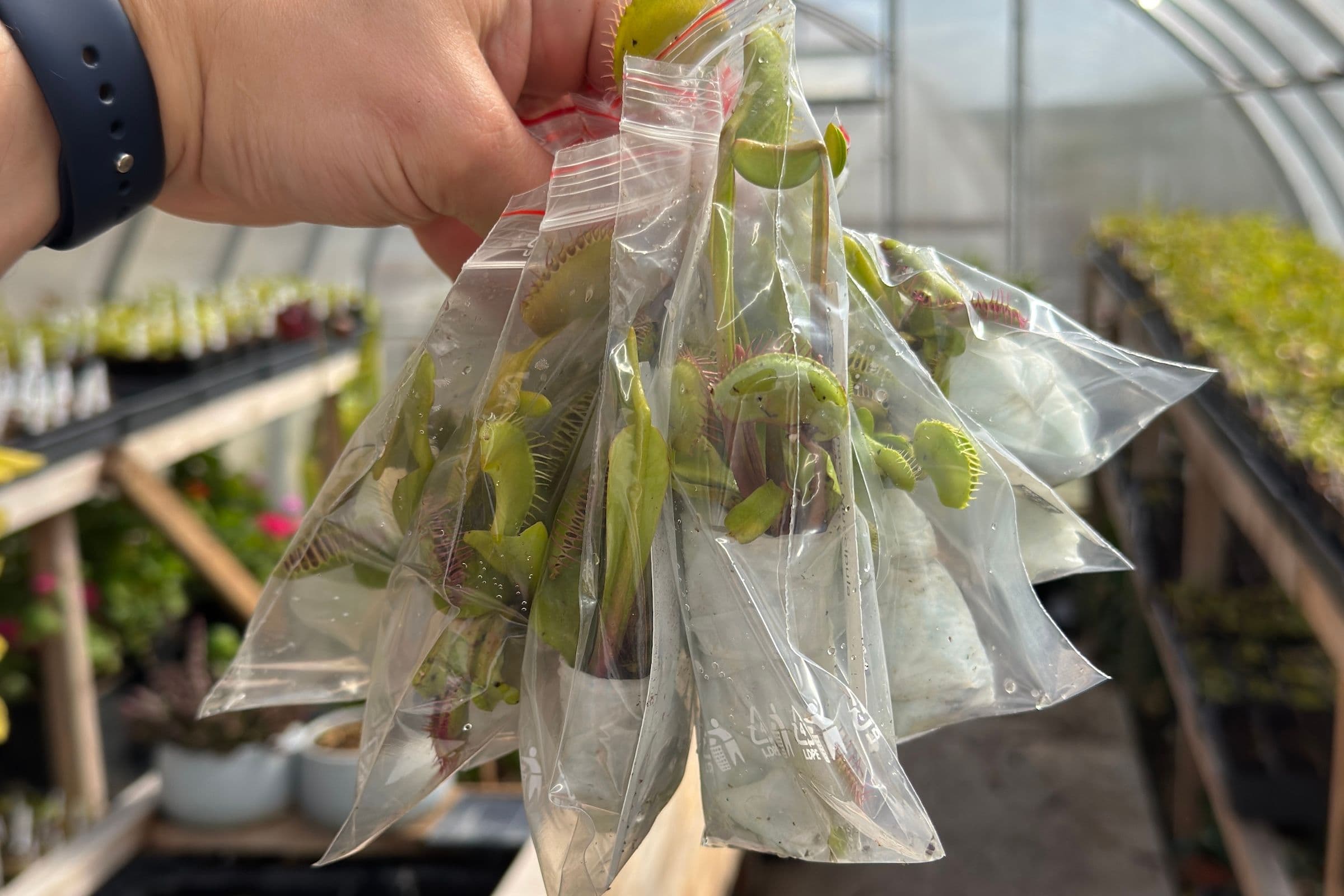
A new Venus flytrap has finally arrived at your home. You carefully unpack it, admire the traps and immediately start wondering: Can it go straight into full sun? Why is one trap turning black? Is everything okay? These are some of the most common questions I receive from customers, and fortunately, the answers are usually very simple.
Your Flytrap Has Been on a Journey
Before reaching your collection, your Venus flytrap has already been through quite an adventure.
It has spent time in a box, traveled through sorting centers and delivery vehicles, and often experienced several days of darkness. Even though Venus flytraps are tough plants, shipping is still a form of stress.
Because of this, it is completely normal for a plant to need some time to adjust after arrival. The important thing is not to panic.
Why Are Some Traps Turning Black?
This is probably the most common message I receive after an order arrives. A customer unpacks the plant, everything looks fine, and then a few days later one or two traps start turning black.
In most cases, this is completely normal. Older traps are often the first parts that the plant abandons when adapting to a new environment. Instead of maintaining every existing trap, the flytrap redirects its energy into new growth.
A few black traps after shipping do not mean the plant is dying. What matters is the center of the plant and whether new growth continues to appear.
Can I Put My Venus Flytrap Directly Into Full Sun?
Another question I hear all the time: "Should I slowly acclimate it, or can it go directly into full sun?" The answer depends on the conditions.
My own Venus flytraps grow in a greenhouse that receives sun from morning until evening. During the growing season, they get as much sunlight as nature allows.
However, a freshly shipped plant has spent several days in darkness. Because of that, I usually recommend giving it a short adjustment period before exposing it to the strongest midday sun.
A few days of gradual exposure is often enough. After that, Venus flytraps should receive as much direct sunlight as possible. Strong sunlight is one of the main reasons these plants develop beautiful colors, large traps and vigorous growth.
What Not to Do After Arrival
When people receive a new plant, they often want to help it as much as possible. Ironically, this is where many problems start. Avoid these common mistakes:
❌ Constantly moving the plant from one place to another
❌ Triggering the traps repeatedly for fun
❌ Repotting immediately after delivery
❌ Using tap water
❌ Keeping the plant in a dark room
❌ Overwatering because it "looks stressed"
The best thing you can do is provide stable conditions and give the plant time to settle.
What I Recommend
When your flytrap arrives:
🌱 Place it in a bright location
🌱 Water only with rainwater, distilled water or reverse osmosis water
🌱 Keep the substrate moist but not waterlogged
🌱 Gradually introduce stronger sunlight if the plant spent several days in transit
🌱 Be patient
That's really it. Venus flytraps do not need special treatments, fertilizers or complicated recovery procedures after shipping.
Look at the New Growth, Not the Old Traps
This is the most important advice I can give. Do not judge a newly arrived Venus flytrap by the traps it arrived with. Those traps were grown under different conditions and have already survived a shipping journey.
Instead, watch the center of the plant. If new leaves and traps are emerging, everything is moving in the right direction. The first traps produced in your own growing conditions tell the real story.
A Little Patience Goes a Long Way
Venus flytraps are much tougher than many people think.
A few black traps, slightly slower growth or minor changes after shipping are usually just part of the acclimatization process. Give the plant sunlight, pure water and a little time.
Soon enough, it will settle in, start producing fresh traps and feel right at home. And that's when the real growing begins. 🌱
— Peter