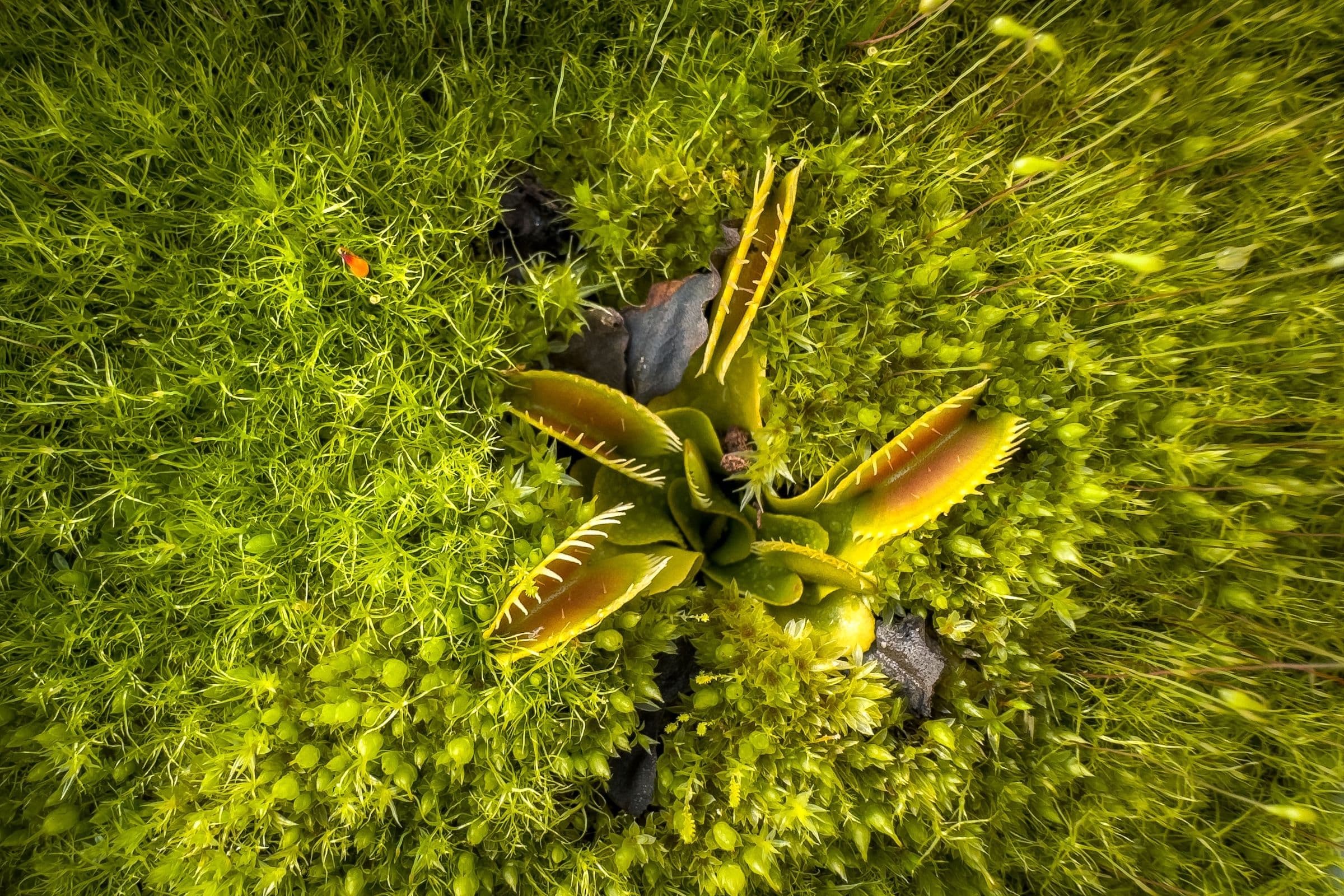
Moss often looks harmless, even nice. In small amounts, it’s a natural part of a bog environment. The problem begins when the pot turns into a solid green carpet and the Dionaea Muscipula underneath almost disappears.
Some of my mother plants are now more moss than flytrap. I know the plants are there, but at first glance you would hardly believe it. At this stage of winter, the plants can still tolerate it — but it’s not something that should be left unchecked.
Why Too Much Moss Is a Problem
Moss itself isn’t the enemy. Uncontrolled moss growth is.
When moss fully occupies the pot, it can cause several issues:
🟢 It blocks light from reaching the rhizome
🟢 It holds excessive moisture around the crown
🟢 It reduces airflow in cold conditions
🟢 It competes for space and oxygen
🟢 It increases the risk of rot during winter
Over time, especially in cold and wet conditions, moss can seriously weaken or even kill Venus flytraps. This doesn’t happen overnight, but it happens slowly and quietly — which makes it dangerous.
Why I’m Not Repotting Yet
Even though the pots clearly need attention, it’s still January. The plants are dormant and repotting right now would cause unnecessary stress.
For now, the best approach is monitoring:
🟢 keeping moisture under control
🟢 making sure pots are not constantly wet
🟢 watching for any signs of rot
Repotting will come soon, once dormancy is ending. Acting too early would do more harm than good.
If This Happens in Your Collection
If your Venus flytraps are starting to disappear under moss, take it as a warning sign, not a reason to panic.
Things to remember:
🟢 Heavy moss growth usually means the substrate is old
🟢 Fully covered crowns should not stay that way long-term
🟢 Repotting in early spring solves most moss-related issues
🟢 Ignoring it completely can lead to serious problems
Moss won’t destroy a plant immediately, but given enough time, it absolutely can.
The Repotting Reality
In my case, repotting won’t be a small task.
In the coming weeks, I’ll be repotting more than 450 mother pots, plus additional mini bogs, propagation trays, and other carnivorous plants. It’s necessary work, but it’s also physically demanding and time-consuming.
Fresh substrate, clean pots, and proper spacing are essential for healthy growth in the next season. There’s no shortcut around that.
Final Notes
Moss taking over a pot is not a failure. It’s information. It tells you the plant has been sitting in the same substrate for too long and needs a reset.
Right now, the plants are waiting. Soon, they’ll get fresh substrate and space to grow properly again. And then the real growing season can begin.
Spring is rescue 🌱
— Peter