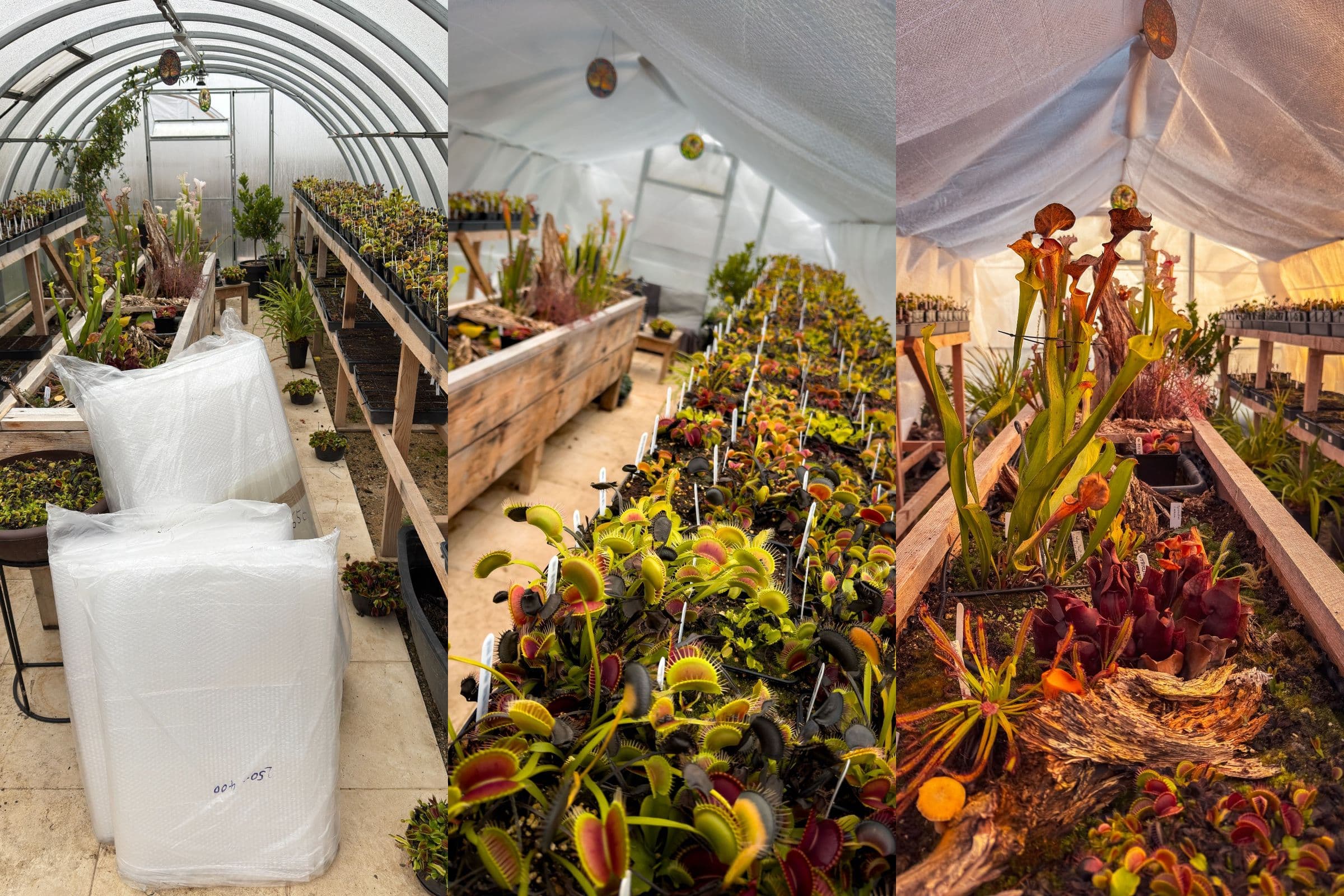
As autumn arrives, the Venus flytrap growing season slowly comes to the end. Their beautifully coloured traps gradually die back, growth slows down, and the plants begin preparing for several months of winter dormancy. For me, that means one thing: it's time to prepare not only my entire Venus flytrap collection for winter, but also the greenhouse where my plants will spend the colder months.
Winter dormancy is a natural part of the Venus flytrap's life cycle. Although some growers find it intimidating, there's really no need to worry if you follow a few basic principles. In this article, I'd like to share my personal approach, what has worked well for me over the years, and how I keep my collection safe even during freezing winter days.
Why Do Venus Flytraps Need Winter Dormancy?
The Venus flytrap (Dionaea muscipula) is native to the southeastern United States, where it experiences not only hot summers but also cooler winters. As daylight hours become shorter and temperatures begin to drop, the plants naturally slow their growth and enter a period of dormancy.
During autumn, you may notice your Venus flytraps producing smaller traps, growing closer to the surface of the soil, and gradually losing some of their older leaves as they turn black and die off. This is completely natural and doesn't necessarily mean that anything is wrong with your plants.
Winter dormancy usually lasts from around November until February or March. During this period, Venus flytraps prefer cooler temperatures, reduced watering, and access to natural daylight.
In my greenhouse, I maintain a winter temperature of approximately 1–2°C (34–36°F). This approach has worked very well for my collection over the years. However, slightly warmer conditions, around 2–10°C (36–50°F), can also be suitable for overwintering Venus flytraps.
1. Cleaning Venus Flytraps Before Winter Dormancy
The first step is to carefully inspect my entire collection. During autumn, Venus flytraps naturally lose some of their older leaves and traps, which gradually turn black.
I gently remove these dead, blackened traps and leaves. This isn't just about keeping the plants looking tidy. In the cool and humid environment of a greenhouse, dead plant material can encourage mould and rot, something I always try to prevent during winter.
I only remove parts that are completely dead. Any green, healthy, and still functional leaves are left untouched, even if they no longer look as impressive as they did during summer.
This is also a good opportunity to check the overall health of the plants, inspect the surface of the growing medium, and look for any signs of pests.
2. Thoroughly Cleaning and Maintaining the Greenhouse
Once the plants are ready, it's time to turn my attention to the greenhouse itself.
Every autumn, I move my entire Venus flytrap collection outside to give myself enough room for a thorough clean. It's quite a time-consuming part of the preparation, but I consider a clean greenhouse essential for successful overwintering.
I wash the entire greenhouse using a pressure washer, removing dirt, deposits, leftover growing medium, and anything else that has accumulated throughout the growing season.
Checking the Joints and Replacing Silicone Sealant
Another part of my annual maintenance routine is inspecting all the joints and gaps in the greenhouse structure.
Sunlight, high summer temperatures, and changing weather conditions can take their toll on sealing materials. Over time, silicone sealant may lose its flexibility, crack, or begin separating from the greenhouse frame.
Whenever I find damaged sealant, I remove it and apply fresh silicone suitable for greenhouse use and compatible with the materials of the structure.
The goal is simple: minimise gaps where warm air could escape during winter.
3. Insulating the Greenhouse with Bubble Wrap
And now comes the part I probably look forward to the least every year – installing the bubble wrap insulation!
If you've ever insulated an entire greenhouse from the inside, you'll know exactly what I'm talking about. Handling large sheets of bubble wrap, attaching them to the greenhouse frame, and making sure everything is properly secured requires quite a bit of patience.
Nevertheless, it's one of the most important steps in my winter preparation.
What Type of Bubble Wrap Do I Use?
Personally, I use three-layer UV-stabilised bubble wrap from the Czech company DAPE, which you can find at www.dape.cz.
I've had excellent experiences with this material. With proper care, it easily lasts me around three growing seasons, and I believe it could last even longer. However, after about three years, I usually prefer to replace it with new insulation.
Another great advantage is the possibility of ordering the bubble wrap in custom dimensions to fit your particular greenhouse. I've also had a very positive experience communicating with the company, whether discussing custom sizes, specifications, or delivery arrangements.
The bubble wrap creates an additional insulating layer that helps reduce heat loss from the greenhouse. As a result, the heating system doesn't need to switch on as frequently, making it easier to maintain a stable temperature.
What Should You Pay Attention to During Installation?
I attach the bubble wrap to the inside of the greenhouse, making sure to cover the walls and roof as thoroughly as possible.
I pay particular attention to the front and rear sections of the greenhouse, especially around the doors. Once everything is installed, I carefully inspect the insulation again to make sure it's securely attached and there are no unnecessary gaps.
Even small gaps can contribute to heat loss, which ultimately means higher heating costs.
At the same time, it's important to maintain the ability to ventilate the greenhouse. A completely sealed greenhouse with constantly high humidity can create ideal conditions for mould growth.
4. Moving the Venus Flytraps Back into the Greenhouse
Once the greenhouse is clean, sealed, and insulated, it's finally time to move the entire collection back inside.
I gradually arrange the plants in their usual places, trying to leave at least some space between the pots to allow air to circulate.
By this point in the season, Venus flytraps usually don't look nearly as impressive as they did during summer. Some have only a few small traps remaining, while others have almost completely died back to the surface of the growing medium.
But that's simply part of their natural cycle. What matters most is keeping the plants healthy so they have enough energy to produce beautiful new traps when spring arrives.
5. How Do I Water Venus Flytraps During Winter?
One of the biggest changes compared to summer growing is watering.
During the growing season, I water my Venus flytraps much more frequently, and during the hottest summer days, I even leave the pots standing in water.
During winter, however, I keep the growing medium only slightly moist.
At low temperatures, the plants use significantly less water, and evaporation is minimal. Excessively wet growing medium combined with cold conditions can increase the risk of rot.
In my greenhouse, I usually water the plants only two or three times throughout the entire winter. Of course, this depends on the weather, temperatures, and the actual moisture level of the growing medium.
At temperatures around 1–2°C (34–36°F), the growing medium dries out extremely slowly.
However, don't treat the number of waterings as a universal rule. In warmer conditions or smaller pots, more frequent watering may be necessary.
The most important thing is to never allow the growing medium to dry out completely, while also avoiding constantly waterlogged conditions. I continue using only rainwater or another suitable source of water with very low mineral content.
6. What Temperature Do I Maintain in My Greenhouse?
For overwintering my collection, I maintain a temperature of approximately 1–2°C (34–36°F).
My goal isn't to keep the plants warm, but rather to protect them from severe frost and prevent their pots from freezing solid.
Venus flytraps can tolerate brief periods of light frost, but prolonged freezing of the root system can be risky, particularly for plants grown in pots.
That's why I prefer a controlled environment where I can monitor the temperature and keep conditions relatively stable.
Heating the Greenhouse with a 3 kW Electric Heater
For heating, I use an electric heater with a maximum output of 3 kW.
At first, that might sound like a fairly powerful heater, but of course, it doesn't run continuously. It only switches on when the temperature drops below my chosen threshold.
Thanks to the greenhouse insulation and the relatively low target temperature, electricity consumption during our winters isn't as high as you might expect.
However, actual energy consumption always depends on outdoor temperatures, greenhouse size, insulation quality, and how long the heater needs to operate.
7. Smart Temperature Monitoring and Automated Heating
Another thing I can hardly imagine overwintering my collection without these days is smart greenhouse monitoring.
I use TP-Link Tapo devices, which allow me to monitor greenhouse conditions and automate the heating system.
Temperature and Humidity Sensor
Inside the greenhouse, I have a Tapo smart sensor that continuously monitors the temperature and relative humidity.
Before winter begins, I always check the batteries to make sure the sensor will continue working reliably throughout the colder months.
One of the biggest advantages is being able to check greenhouse conditions remotely using the mobile app.
Smart Plug for Heating Control
I also use a smart plug from the same brand, which allows me to monitor electricity consumption and automatically switch the heater on or off according to my configured settings.
This means I don't have to constantly check the thermometer or manually control the heater.
However, it's important to ensure that the smart plug, heater, and electrical installation are all rated for the required power and suitable for greenhouse conditions. With a 3 kW heater, electrical safety is particularly important. It's also advisable to have an independent backup or frost-protection system in case the sensor, connection, or automation fails.
8. What Do I Pay the Most Attention to During Winter Dormancy?
Even though my greenhouse is fully prepared and most of the heating is automated, I still regularly check my collection throughout winter.
There are three things I pay particular attention to:
- Excessive humidity and mould. I regularly inspect the plants, remove any additional dead leaves and traps, and briefly ventilate the greenhouse whenever weather conditions allow.
- Growing medium that's too wet or too dry. I water according to the actual moisture level rather than following a fixed schedule.
- Temperature drops and heating performance. I check the temperature readings, automation settings, and heater operation, especially during periods of severe frost.
Winter dormancy doesn't mean completely forgetting about your plants. They simply need much less attention than during the main growing season.
9. When Does Venus Flytrap Winter Dormancy End?
As spring approaches, daylight hours become longer, temperatures gradually rise, and Venus flytraps begin waking up from their winter rest.
Usually, sometime during March, the first fresh leaves and traps begin emerging from the centre of the plants.
At this stage, I gradually adjust my care routine to match their increasing activity. As temperatures rise and the plants begin growing actively again, I also increase watering.
I remove the greenhouse insulation according to the weather conditions to prevent the greenhouse from overheating during sunny spring days.
And finally, a brand-new growing season begins!
Frequently Asked Questions About Venus Flytrap Winter Dormancy
Do Venus Flytraps Need Winter Dormancy?
Yes. Venus flytraps naturally experience a period of winter dormancy in their native habitat. For healthy long-term cultivation, it's generally recommended to provide them with a cool resting period lasting approximately three to four months.
What Is the Ideal Temperature for Venus Flytrap Dormancy?
A cool environment of approximately 2–10°C (36–50°F) is generally suitable for winter dormancy. Personally, I maintain temperatures around 1–2°C (34–36°F) in my greenhouse to protect my collection from more severe frost.
How Often Should I Water My Venus Flytrap in Winter?
This depends on the temperature, pot size, and growing conditions. At temperatures around 1–2°C (34–36°F), I usually water only two or three times throughout the entire winter. The growing medium should remain slightly moist and never dry out completely.
Is It Normal for Venus Flytraps to Turn Black in Winter?
Yes. During autumn and winter, older leaves and traps naturally turn black and die off. As long as the rhizome remains healthy, the plant can produce new growth in spring. However, if the centre of the plant becomes soft or starts rotting, this may indicate a problem.
Can Venus Flytraps Survive Winter Outdoors?
Venus flytraps can tolerate brief periods of light frost, but prolonged freezing of the pots can be dangerous. In climates with cold winters, such as Central Europe, I recommend protected overwintering in a cool greenhouse or another suitable sheltered location, especially for valuable plants.
Can I Keep My Venus Flytrap on a Windowsill During Winter?
Yes, provided you can offer a sufficiently cool and bright environment. A typical heated room with temperatures around 20–23°C (68–73°F) isn't ideal for natural winter dormancy. A bright, unheated room is generally a better option.
Do Venus Flytraps Need Light During Winter Dormancy?
Yes, Venus flytraps still need light during winter dormancy. However, the lower the temperature, the less light they require.
Final Thoughts: Winter Dormancy Is a Natural Part of Growing Venus Flytraps
Every autumn, as I watch my collection gradually lose its beautiful summer traps, I feel a little sad that another growing season is coming to an end. On the other hand, I know that winter dormancy is a completely natural and important part of the life cycle of these fascinating plants.
Preparing the greenhouse certainly takes quite a bit of time, and installing bubble wrap insulation is definitely not one of my favourite jobs. But the feeling when everything is finally finished, the plants are back in their places, and the greenhouse is ready for the first frosts makes all the effort worthwhile.
And then there's nothing left to do but wait for spring and look forward to watching the entire collection come back to life.
Here's to a frost-free winter for your flytraps!
Peter