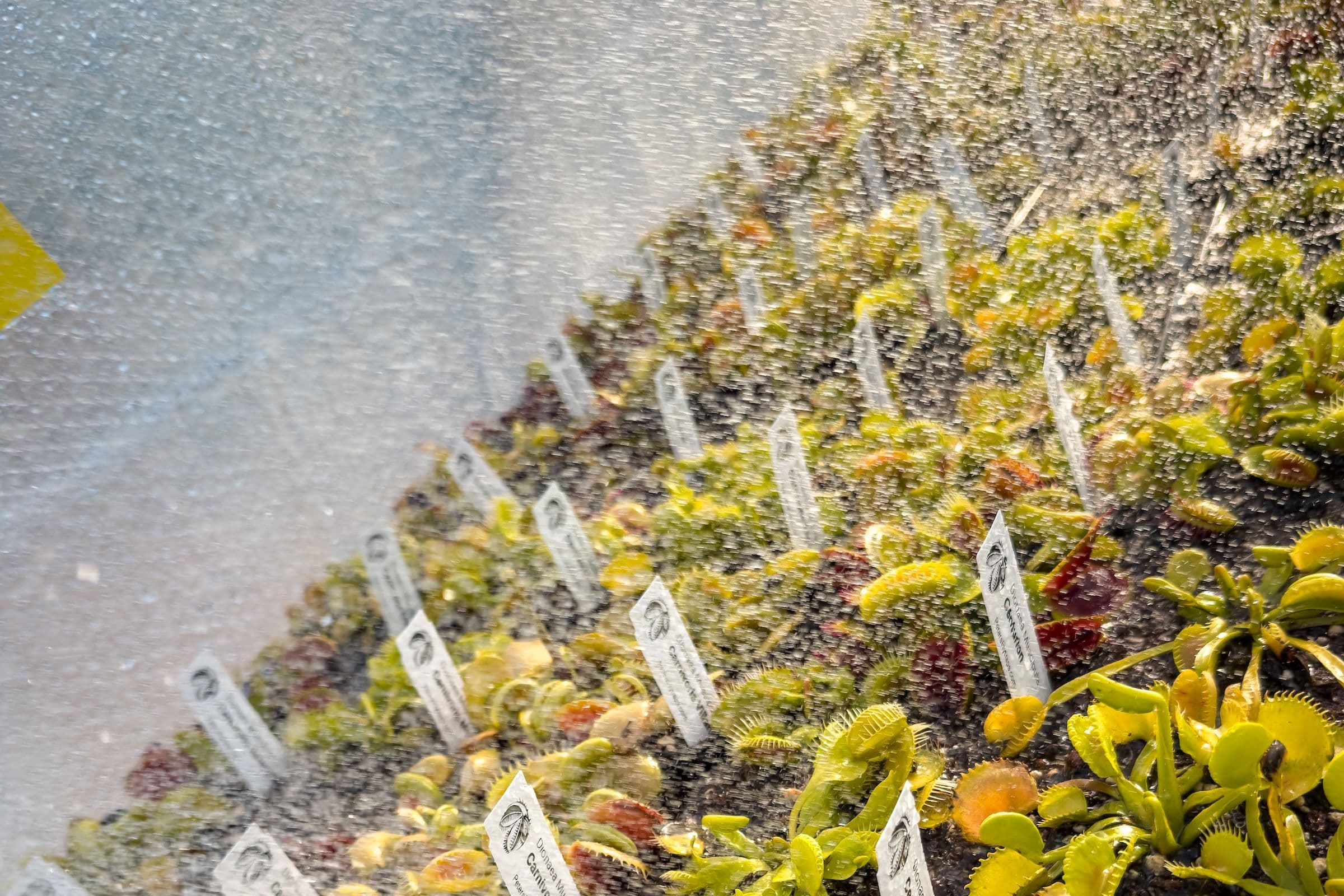
If you grow Dionaea Muscipula (Venus flytraps), you’ve probably heard one rule repeated over and over again: never use tap water.
But is it really that simple?
The answer is: it depends on your water quality.
What Really Matters: PPM (Total Dissolved Solids)
The key factor isn’t whether the water comes from a tap, bottle, or sky, it’s the amount of dissolved minerals, measured as PPM (parts per million).
✅ 0–50 PPM → ideal (distilled / reverse osmosis)
✅ 50–100 PPM → generally safe
⚠️ 100–150 PPM → borderline (long-term risk)
❌ 150+ PPM → unsafe for flytraps
Venus flytraps naturally grow in nutrient-poor bogs, so their roots are extremely sensitive to mineral buildup.
Can You Use Tap Water for Venus Flytraps?
Yes, but only under specific conditions. My tap water measures around 80 PPM
This puts it within the safe range, which means I can use it without immediate risk to my plants.
However, this does NOT mean all tap water is safe. In many regions, tap water can easily exceed 200–300 PPM, which will slowly damage or kill the plant over time.
Why Distilled Water Is the Safest Option
Even if your tap water is acceptable, distilled or reverse osmosis (RO) water is always the safest choice.
👉 Contains 0 minerals (0 PPM)
👉 No risk of salt buildup in soil
👉 Consistent and predictable
If you want a “set and forget” solution, distilled water is the way to go.
Is Rainwater Good for Flytraps?
Rainwater is often considered the best natural option, because it closely matches the plant’s natural environment.
But there’s a catch:
✅ Excellent if collected in a clean environment
⚠️ Can be contaminated in urban/industrial areas
If you’re collecting rainwater, make sure your setup is clean and not picking up pollutants from roofs or gutters.
The Hidden Danger: Mineral Buildup Over Time
The biggest mistake growers make is thinking short-term.
Even slightly mineralized water can:
👉 Accumulate in the soil
👉 Burn sensitive roots
👉 Cause slow decline over months
This is why water quality is one of the most important factors in long-term flytrap health.
Lesson Learned
There is no universal “yes or no” answer.
✔️ Tap water can be used, but only if it’s low in PPM (ideally under 100)
💎 Distilled / RO water is always safest
🌧️ Rainwater is excellent if clean
If you’re unsure about your water, measure it. A simple TDS meter can save your plants.
Final Thought
Understanding your water is more important than blindly following rules. Because in the end, it’s not about tap vs distilled. It’s about what’s actually in the water you’re using.
Take care! 🌱
— Peter