When Preparation Matters More Than Speed
Before a single plant is touched, preparation is everything. This season, I stocked up properly:
🪴 4 × 250 liters of high-quality white peat moss
🪴 2 × 100 liters of perlite
🪴 50 kilograms of silica sand
🪴 additional growing containers, so I don’t have to clean used pots while repotting
That last part is crucial. Having new containers ready means I can move plants immediately into fresh pots without slowing down the process. When you’re repotting hundreds of plants, every small efficiency matters.
The Scale of the Madness
To be honest, even I sometimes stop and ask myself why. What’s waiting for me this season?
🪴 Around 450 unique Dionaea Muscipula cultivars
🪴 3 large carnivorous bogs
🪴 10 smaller Dionaea bogs
🪴 oughly 500 of my own Venus flytrap seedlings
🪴 Plus plants prepared for sale
And yes — I mostly grow only Venus flytraps. Which somehow makes it both simpler… and completely insane.
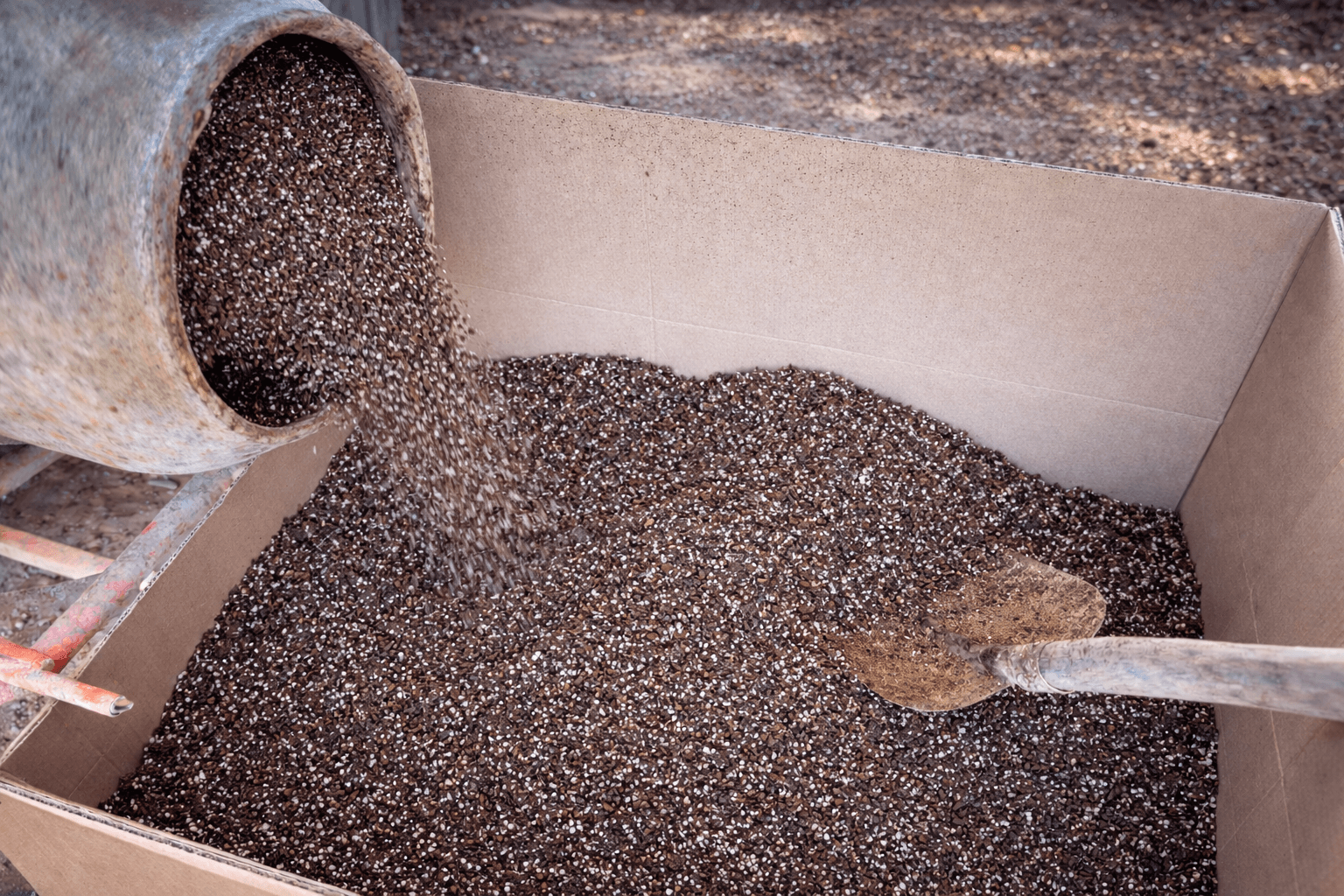
Mixing the Substrate: No Hand Mixing This Time
With volumes like this, hand-mixing substrate is simply not an option. You would never achieve a consistent, airy mix by hand — and consistency matters.
That’s why I use a small concrete mixer.
It might sound extreme, but it’s honestly the best solution. The result is a perfectly blended, fluffy, evenly mixed growing medium that every plant receives in exactly the same quality.
My standard mix looks like this:
🪴 4 parts white peat moss
🪴 1 part perlite
🪴 1 part silica sand
This ratio has worked flawlessly for me over the seasons. The substrate stays airy, drains well and still retains enough moisture. Most importantly — my Venus flytraps absolutely thrive in it.
New Season, New Experiments
This year, I don’t want to stop at what already works.
Alongside my proven mix, I plan to experiment with peat-free growing media. It won’t replace my main setup yet — this is purely experimental. I want to see how alternative mixes behave, how plants respond long-term and whether it’s possible to achieve similar results without peat.
I already have several ideas in mind and I’ll be sharing the results as the season progresses.
A Lot of Work — and a Lot of Excitement
There’s no denying it: this will be a massive amount of work. Repotting hundreds of plants is physically demanding, time-consuming and messy.
But it’s also one of the most important moments of the entire season.
Fresh substrate, clean containers and healthy roots set the foundation for everything that follows — growth, color, trap size, flowering and overall strength.
I’m genuinely excited for this season and have high hopes it will be even better than 2024. Everything is ready. Now it’s just a matter of getting my hands dirty.
Stay tuned — the madness is about to begin 🌱
— Peter