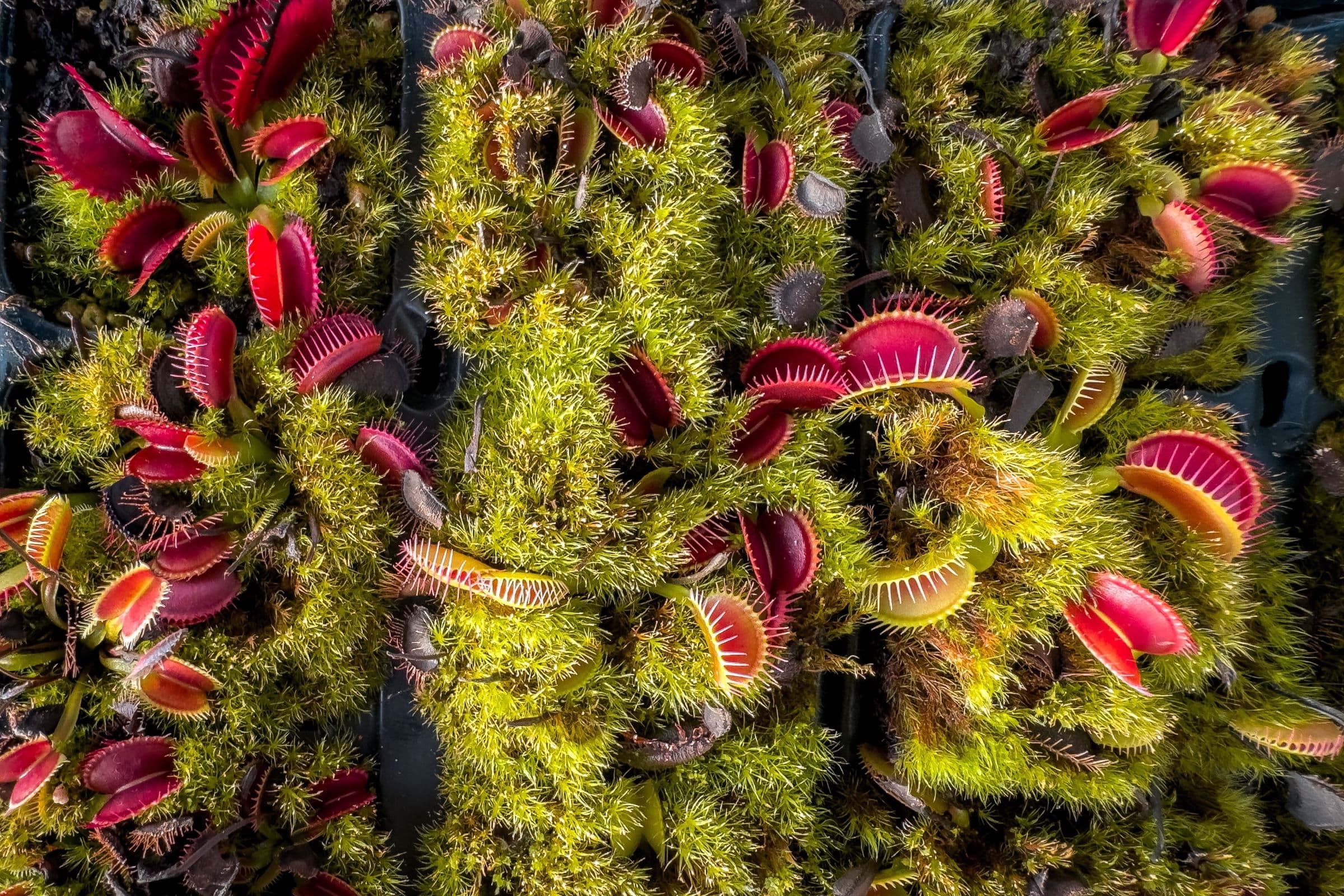
Every season I sow new Dionaea Muscipula seeds – both open-pollinated seeds and cross-breedings I make during spring and summer. It’s my favourite kind of experiment. You never really know what will pop up and that’s exactly why I love it.
Fresh Seeds, Fast Germination (No Stratification Needed)
All of my seeds are fresh from that season and they usually germinate very fast. Fresh Dionaea seeds don’t always need a cold period or stratification – I simply sow them as soon as I’ve collected everything at the end of the season.
Of course, nature likes to do things her own way. Some seeds take a break and germinate a year later. This happens quite often and it’s one of the reasons why I never rush to repot or disturb seedling pots. There’s always something hiding, waiting for its moment.
Why I Don’t Repot for Up to 3 Years
People often repot seedlings very early. I usually don’t.
I leave them in their original pot until they reach a bigger size, which can sometimes mean up to 3 years in the same tray.
— Sometimes I don’t have time.
— Sometimes I just prefer to leave it to nature.
The only exception: if I see a really promising cross – interesting colour, shape, teeth or growth habit – I’ll gently repot those selected seedlings and keep them aside, so I can watch them more closely.
My Growing Medium and Watering Style
For seedlings, I keep it simple:
— Peat moss + perlite as a growing medium
— I spray water from the top quite often
I have the feeling that top watering helps them germinate, keeping the surface evenly moist and washing the seeds slightly into the moss. It also mimics natural rain, which I like but don't push water really hard! It can spread the seeds all over and that's not what we want so rather just use spray.
Late Starters and Strange Growth Rates
One thing I see every year:
— Sometimes later-sown seeds look bigger and stronger than those sown earlier
— It’s completely normal
There are so many factors:
— Which cultivars were crossed together
— Light, temperature and humidity at the time
— Overall growing conditions
Because of that, I don’t stress about perfect timing. I let nature sort them out and just watch how each batch develops in its own rhythm.
Watching Seedlings Over Many Seasons
The best part? Comparing seedlings across years.
Every season I look at the trays and remember:
— which crosses I made
— which pots are open-pollinated “surprises”
— which ones I marked as “promising” last year
Seeing how they change between seasons, how some suddenly “wake up” and start to show unique traits, is absolutely fascinating. One day it’s just a tray of green dots. A few years later, it might hide your next favourite cultivar.
This slow magic is why I keep sowing every year. You never know what will appear – and that’s the beauty of it.
Stay snappy 🌱
— Peter