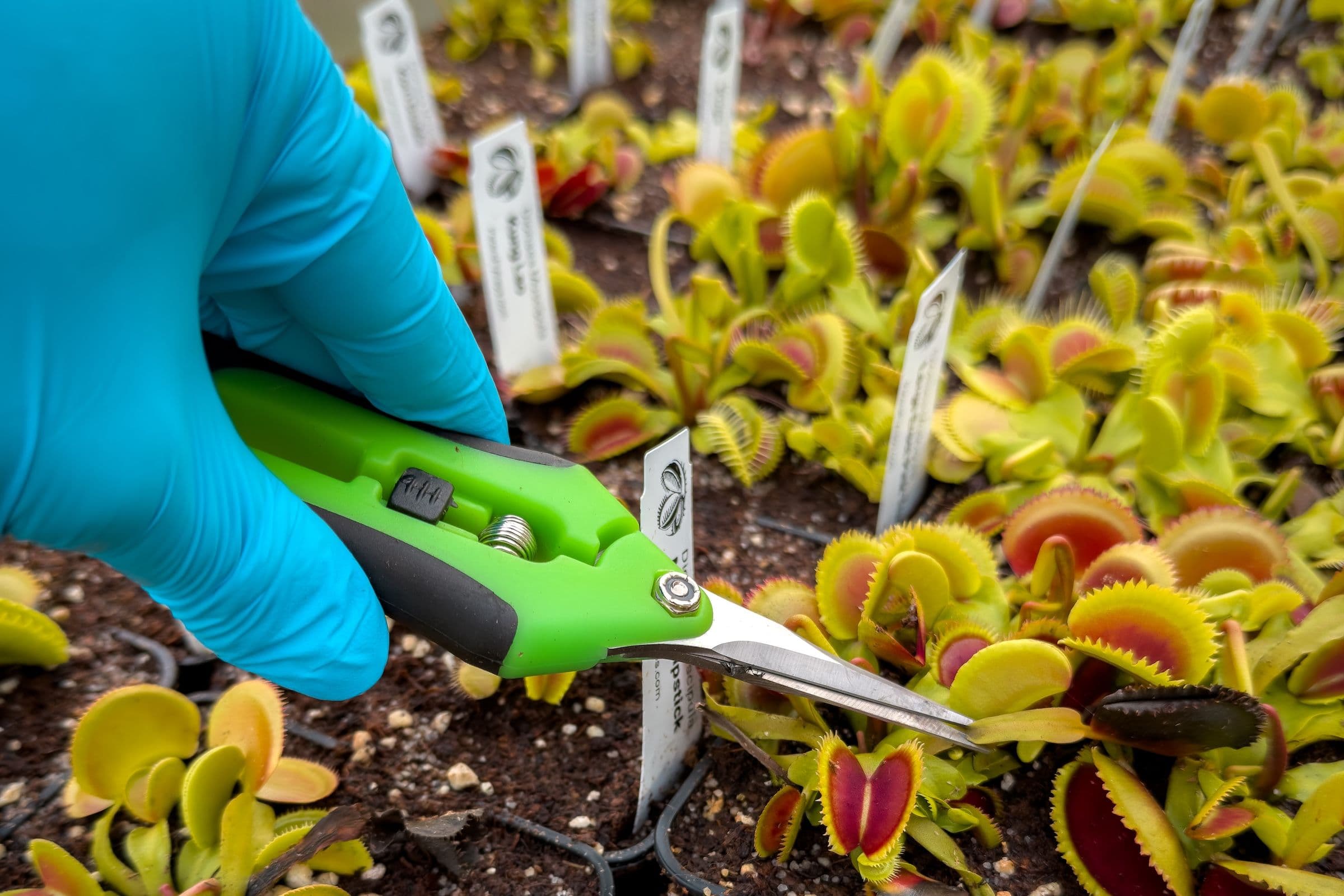
When people see me pruning my Venus flytraps, the first reaction is usually: “Why are you cutting healthy-looking traps?”
But the truth is — I’m not pruning for aesthetics. I’m pruning for plant health and long-term performance.
Venus flytraps naturally produce traps that age, blacken, die off, or get damaged. If those parts stay on the plant too long, they don’t just look bad — they can actually slow the plant down.
Why I Prune During the Growing Season
Pruning is not a winter-only job. During the active season, it becomes even more important.
Here’s why I do it:
🪴 1. Removing old and black traps
Old traps eventually die and turn black. If they stay on the plant, they can attract mold or pests and waste the plant’s energy.
🪴 2. Preventing mold and rot
In humid conditions (especially in bog setups or greenhouses), decaying traps can become a starting point for fungus or rot spreading into healthy parts.
🪴 3. Redirecting energy to new growth
Every Venus flytrap has limited energy. When old traps are removed, the plant can focus on producing bigger, stronger and healthier new traps.
🪴 4. Improving airflow and light
Dense clusters of dead traps can block light and reduce airflow around the crown. A clean plant simply grows better.
What I Actually Remove
I don’t “clean everything.” That’s important.
I only remove:
🌿 fully black traps
🌿 clearly dying or mushy parts
🌿 traps damaged beyond recovery
🌿 sometimes flower stalks if I want to prioritize growth
Healthy green traps always stay.
Does It Stress the Plant?
If done correctly — no.
Venus flytraps are surprisingly tough. Removing dead or dying material actually reduces stress, because the plant no longer needs to maintain useless tissue.
The key is:
🌿 clean cuts
🌿 only removing what is truly dead or useless
🌿 never stripping healthy growth
A Small Routine With Big Impact
In a big collection like mine, pruning is a constant small routine rather than a one-time job. I go plant by plant, checking health, removing what’s unnecessary and making sure everything stays in balance.
It’s simple work, but it makes a huge difference over time — especially when you grow hundreds of cultivars.
Final Thoughts
Pruning Venus flytraps isn’t about making them look perfect. It’s about helping them stay strong, clean and ready for continuous growth.
A healthy flytrap isn’t the one with the most traps — it’s the one that keeps producing new, vigorous growth without wasting energy on the old one.
And every time I prune, I’m not taking something away… I’m helping the plant move forward.
Take care! 🌱
— Peter