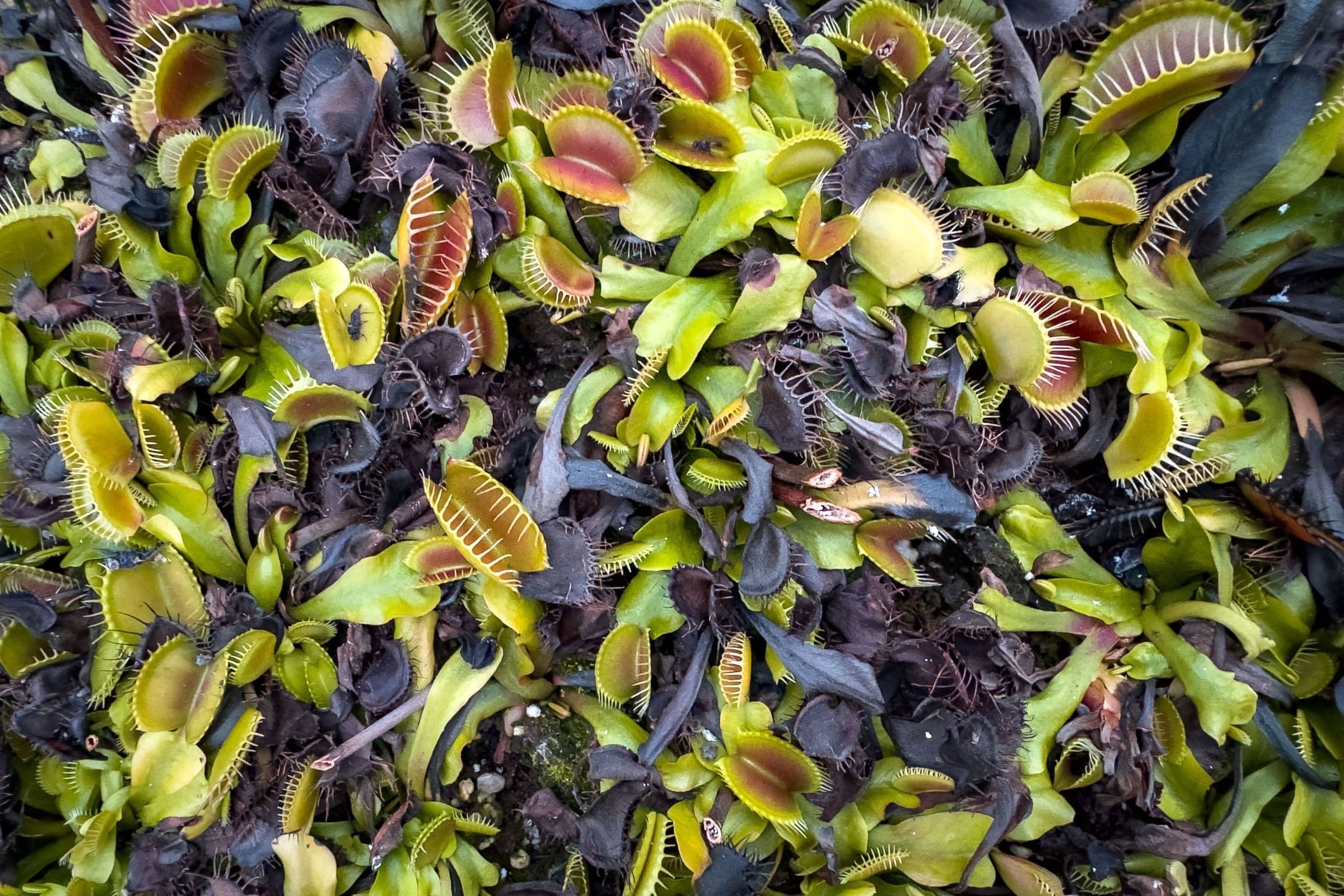
Autumn in the greenhouse means one thing — the Venus flytraps are entering their winter rest. Leaves start blackening, growth slows down and traps become smaller. Don’t panic — this is a natural part of their yearly rhythm. With a few simple care adjustments, your plants will stay healthy through the cold months and wake up stronger in spring.
Venus Flytraps Turning Black? It’s Normal!
When temperatures drop and days shorten, Venus flytraps begin to blacken. Older traps die back while the plant stores energy in its rhizome. It might look alarming, but it’s perfectly normal. Resist the urge to repot or over-care — less is more in autumn!
Changes in Growth Form
Different Dionaea cultivars react differently to seasonal changes. Many upright-growing varieties switch to a low, prostrate rosette form, hugging the soil for protection. Others that usually grow compact all year develop even shorter petioles and smaller traps. This transformation shows the plant is preparing for winter dormancy.
Adjusting Watering for the Cold Season
As temperatures fall, so should your watering frequency. I don’t recommend keeping standing water in trays during this time — it increases the risk of root rot in cooler conditions. Instead, keep the growing medium moist but not soaked. A light touch of dampness is enough to keep the rhizome hydrated without suffocating the roots.
Essential Greenhouse Tips Before Winter
Before real cold hits, take time to tidy up your greenhouse:
- Trim dead traps to prevent mold and rot.
- Clean the pots and trays from old moss or decayed leaves.
- Provide air circulation — stagnant air invites fungus.
- Check for pests like fungus gnats before the plants go fully dormant.
- Lower watering gradually, not suddenly — help your plants adapt naturally.
Enjoy the Calm Before Winter
Autumn is busy, but also peaceful. As my Venus flytraps slowly settle down, the greenhouse gets quieter — a sign of the season changing. It’s a good time to plan next year’s repotting, sort divisions, and prepare for spring surprises. The dormancy months may look dull, but they are vital for healthy, vigorous plants once the warmth returns.
Stay calm, stay snappy 🌱
— Peter